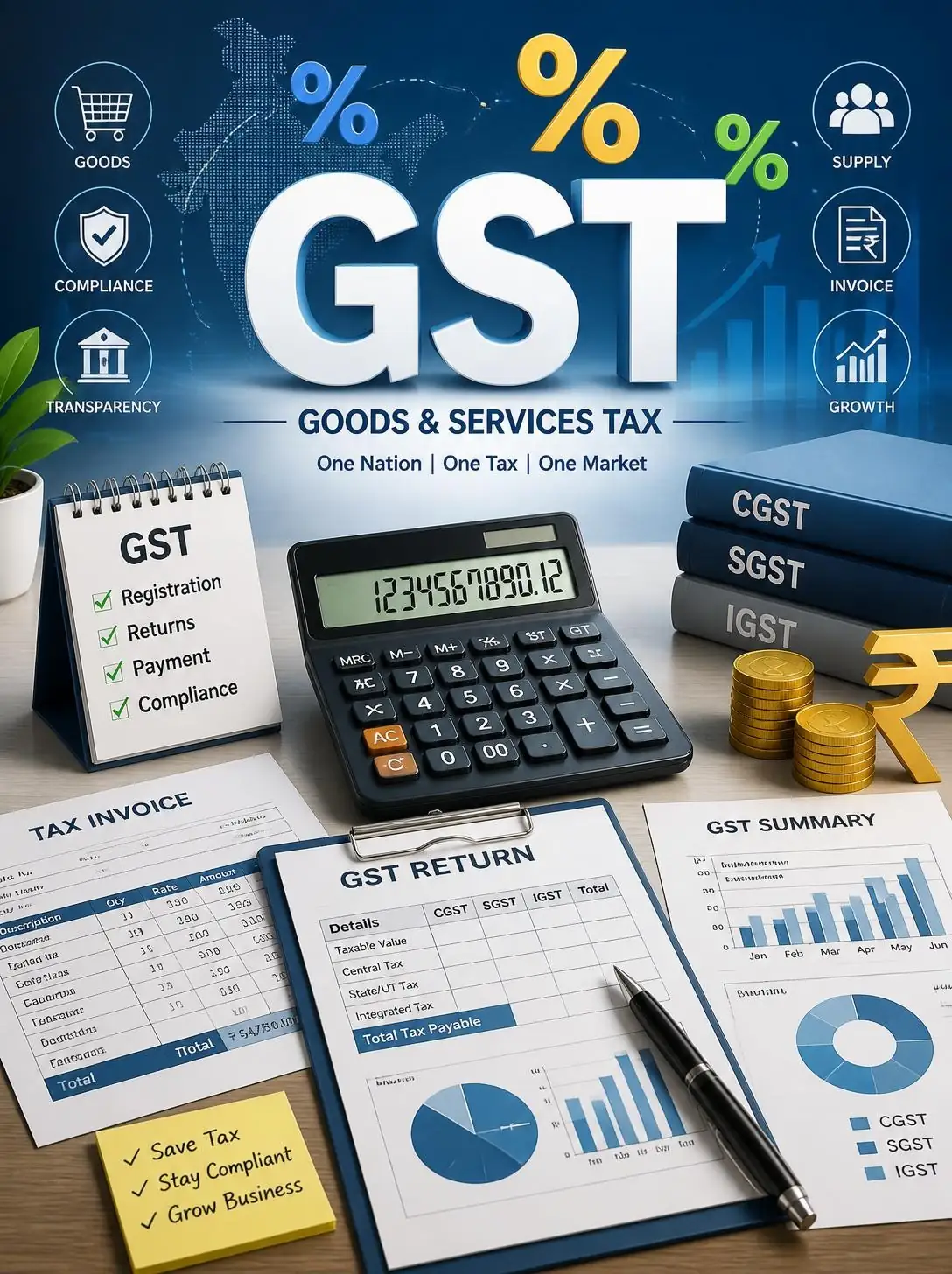
Understanding GST Components
Under the GST framework, businesses may be liable to pay CGST, SGST, or IGST, depending on the nature of the transaction:
- Every intra-State supply attracts both CGST and SGST.
- Every inter-State supply attracts IGST.
Taxes Subsumed Under GST
GST consolidated a wide array of previously separate taxes, including:
- Central taxes such as Central Excise Duty, Additional Excise Duties, excise duty under the Medicinal and Toilet Preparations Act 1955, Service Tax, Countervailing Duty, Special Additional Duty of Customs, and related Central surcharges and cesses on goods and services.
- State-level taxes such as VAT/Sales Tax, Entertainment Tax (excluding levies by local bodies), Central Sales Tax, Octroi and Entry Tax, Luxury Tax, Purchase Tax, taxes on lottery, betting, and gambling, as well as related State cesses and surcharges.
The GST Council
The GST Council examines matters relating to GST and makes recommendations to the Union and State Governments on tax rates, exemptions, and threshold limits. It is chaired by the Union Finance Minister and includes the Union Minister of State for Revenue or Finance, along with a nominated Finance or Taxation Minister from each State.
How FINACT Professional Services Can Help
At FINACT Professional Services, we provide comprehensive advisory support for business start-ups, including assistance with business entity formation and the full range of GST procedures involved in getting a new venture off the ground. Our start-up guidance and GST services are available to clients across India, regardless of location.
Our GST specialists work with you to identify exactly which GST obligations and compliance requirements apply to your business, then manage the formalities required to register your business and obtain your Goods and Services Tax Identification Number (GSTIN). For existing businesses that haven’t yet completed their migration to GST, we also arrange the necessary registration and transition support.
Our GST Services
Our team brings deep, practical knowledge of GST and offers a comprehensive range of related services, including:
- GST registration
- GST accounting and bookkeeping
- GST return filing
- Liaison and counselling with GST authorities on behalf of clients
- Consultancy on complex or technically challenging GST matters
- Availment and reconciliation of Input Tax Credit (ITC)
- And a range of other GST-related support services